

Best Pet Insurance in Hawaii 2026 is an important topic for pet owners who want to care for their pets while preparing for unexpected illnesses or injuries. Whether you have a dog, a cat, or another type of pet, pet insurance may help cover eligible veterinary costs and provide peace of mind.
When shopping around for the pet insurance in Hawaii, consider factors such as coverage, monthly premium, deductible, reimbursement percentage, and policy limits. Pet owners can compare these details to understand different coverage options and choose a policy that fits their pet’s needs and budget. SimpleInsured provides pet insurance information and coverage considerations to help pet owners explore their options.
What Is Pet Insurance?
What is pet insurance? Best Pet Insurance in Hawaii 2026 is a useful topic for pet owners who want to understand how coverage may help with eligible veterinary expenses. Pet insurance is a policy that helps offset the cost of certain eligible veterinary bills. It may cover some expenses if your pet has an accident or gets sick, including diagnostic tests, medicines, surgeries, and other procedures, depending on the policy.
Pet insurance differs from human health insurance because pet owners generally pay the veterinary bill first and then submit a claim for reimbursement. The amount reimbursed depends on the policy’s coverage, terms and conditions, deductible, reimbursement percentage, and annual limit.
If your pet gets sick or injured, a pet insurance policy may help with eligible treatment costs. However, review the policy carefully because not all veterinary services and medical conditions are covered..
Types of Pet Insurance
Pet insurance plans can vary in terms of coverage, and knowing the types can help pet owners understand what their pet needs, and which plan is more suitable and affordable.
1. Accident-Only Pet Insurance
Accident only usually covers veterinary costs related to incidents and injuries, but does not include illness, examination, or preventive care.
2. Accident and Illness Pet Insurance
This type is more comprehensive and can vary depending on the plan, but generally covers veterinary expenses associated with incidents, injuries or examinations, diagnostic tests, medication, surgery, or other treatments.
3. Pet Wellness and Preventive Care Coverage
Preventive care coverage can be an add-on to a plan, and may cover things such as vaccinations, wellness exams, spaying/neutering, or dental care, but not as part of a policy’s base benefits.
4. Hereditary and Chronic Condition Coverage
Chronic, hereditary, and congenital coverage can sometimes be added to a plan, and can help with the treatment of chronic conditions or illness that are present at birth, but this varies by carrier.
5. Specialty Pet Insurance Coverage
Some policies provide additional coverage for specialty or specific services, but this depends on the plan and the insurance company.
6. Travel or Boarding Benefits
In addition, some policies have additional benefits, such as those related to boarding or traveling, but these are not included in all plans.
When shopping around for the best pet insurance in Hawaii 2026, it is important to keep in mind factors such as the type of coverage, the monthly premium, deductible, reimbursement level, annual limits, any exclusions, and waiting periods.
Understanding Pet Insurance in Hawaii
A pet insurance policy in Hawaii is best selected based on your particular pet’s health, household finances, and local veterinary treatment options. Veterinary care costs are highly dependent on the island, clinic, treatment, and the severity of the issue.
When Looking at Pet Insurance Hawaii Plan Options, Ask Yourself:
- Monthly premium: How much you pay in order to keep your insurance policy.
- Per Year Deductible: The contribution you will be required to make on eligible expenses, billed for each calendar year.
- Insurance rate: The proportion of eligible costs that an insurance provider is liable for after a deductible has been met.
- Coverage amount (annual): The maximum amount the policy may pay for during a policy year.
- Waiting time periods: The time after the purchase of the plan before specific benefits can be used.
- Exclusions: Treatments, conditions or services not included in the policy.
Looking over these information will give you some idea of how a policy might work if you need your pet to see a veterinarian.
Pet Insurance Plans in Hawaii: What Are My Options?
What Are The Types Of Coverage? All pet insurance policies are classified into three broad categories.
1. Accident-Only Pet Insurance
Accident insurance: This type of coverage applies to certain covered veterinary expenses in case of an accident. This could be treatment for broken bones or injuries (such as a scratch or cut), foreign body ingestion, or accidental injuries.
This cover might be appropriate for pet owners who only wish to be protected against accidents, rather than illness.
Nevertheless, accident-only plans usually don’t include coverage for illnesses, as well as for wellness examinations.
2. Accident and Illness Insurance
Accident and illness insurance offers a larger scope of protection than accident-only insurance. Subject to the terms and conditions of the policy, it can assist with paying for covered expenses related to accidental injuries and some illnesses.
Covered Conditions May Include:
- Digestive problems
- Skin infections and allergies
- Certain chronic conditions
- Diagnostic tests and imaging
- Eligible surgeries and hospitalization
- Prescription medications related to covered conditions
This coverage can be useful for pet owners seeking coverage for more costly veterinary bills.
Read the policy’s exclusions, waiting periods, and pre-existing condition guidelines before buying.
3. Pet Wellness and Preventive Care Coverage
Some insurance providers have optional wellness or preventative care packages that can assist with some of the more routine veterinary expenses.
For some plans, covered services may include vaccination, wellness exams, flea and tick protection and additional preventive services.
Wellness coverage may be offered as a supplement rather than a substitute for accident and illness insurance.
Owners need to factor in the extra cost of these packages against what they would be normally paying their vet for.
Average Cost of Pet Insurance in Hawaii in 2026
How much does Pet Insurance Hawaii usually cost? Depending on your pet’s age, breed, health history, location and the level of coverage you select, the cost can vary.
There is not one price you will see that will be the same for all pet owners in Hawaii. A policy with a low monthly premium may have a high deductible or lower reimbursement limit, while a more broad policy might be more expensive.
Compare Pet Insurance Hawaii Price on These:
| Cost Factor | How It May Affect Your Premium |
|---|---|
| Age of Pet | Might cost more for older pets. |
| Breed | Different breeds may be cheaper to insure depending on their risk. |
| Region Expenses | Location can affect insurance and veterinary expenses. |
| Type of coverage | Accident and illness coverage usually offers greater coverage than accident-only coverage. |
| Deductibles | A greater deductible can lead to a lower monthly premium but a more expensive expense in the short term. |
| Reimbursement rate | A higher reimbursement amount may also result in an increase in the premium. |
| Coverage limits | Higher coverage limits can mean higher premiums. |
Example of How Pet Insurance Costs Work
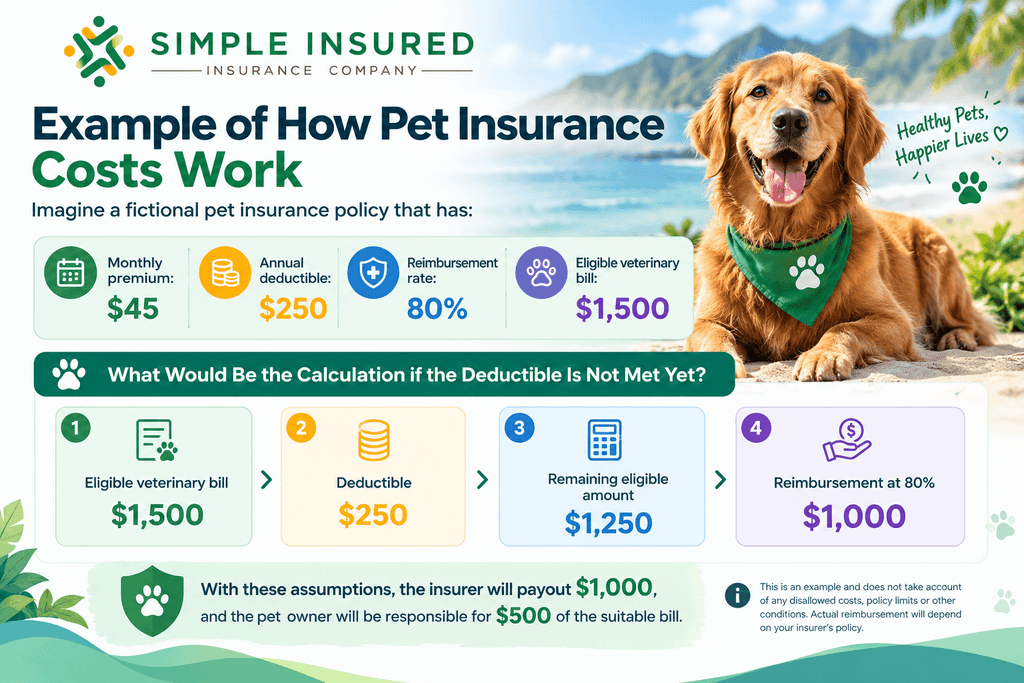
Imagine a fictional pet insurance policy that has:
- Monthly premium: $45
- Annual deductible: $250
- Reimbursement rate: 80%
- Eligible veterinary bill: $1,500
What Would Be the Calculation if the Deductible Is Not Met Yet?
- Eligible veterinary bill: $1,500
- Deductible: $250
- Remaining eligible amount: $1,250
- Reimbursement at 80%: $1,000
With these assumptions, the insurer will payout $1,000, and the pet owner will be responsible for $500 of the suitable bill.
This is an example and does not take account of any disallowed costs, policy limits or other conditions. Actual reimbursement will depend on your insurer’s policy.
Explore more:- Top 5 Ways to Compare Local Medical Insurance for Married Couples in USA 2026
How to Compare Pet Insurance Policies in Hawaii in 2026
Looking for the right coverage involves more than just looking at the monthly premiums. Pet owners should read the policy carefully and get an idea of how the plan might handle various veterinary bills.
1. Compare Multiple Insurance Quotes
Begin by gathering quotes from various insurers to compare Best Pet Insurance in Hawaii 2026 options. Review the premium, deductible, reimbursement percentage, and annual coverage maximum.
Ensure you are making an “apples-to-apples” comparison when you compare pet insurance plans. If one plan is significantly cheaper, it may offer less coverage or have more exclusions
2. Review Coverage for Accidents and Illnesses
Does the plan cover only accidents, or does it also include qualified illnesses?
Check what medical conditions, tests, drugs, and procedures are covered if you seek a wider scope.
See if there are any exclusions for conditions that are hereditary or something you were born with.
3. Understand Deductibles and Reimbursement
Cost of care When your pet needs care, your deductible and reimbursement rate may also play a role in your costs.
For example, a policy with a lower premium per month can have a higher deductible. However, another policy can have a higher premium but will provide a higher reimbursement percentage.
By reviewing the information above you may be able to get an idea of how much you may be out of pocket.
4. Check Waiting Periods and Exclusions
Waiting periods are common for some of pet insurance policies. Some policies also exclude some conditions, even pre-existing conditions.
Review the policy documents for details about coverage beginning date and what you cannot be reimbursed for.
5. Factor in the Age and Specific Health Requirements of Your Pet
Depending on your pet’s age, breed, and health history you may need a specific type of coverage and be quoted a different price.
Compare the price of taking the coverage early on for smaller animals. For elderly ones, look into age restrictions, exclusions, and the benefits offered.
6. Review the Claims Process
Clm Submission & Adjustment: Know your claim submission and processing procedures before purchasing the policy.
Find out if there’s any cost to you in advance at the vet clinic, what documentation you will need to submit and how your claim is reimbursed.
Knowing the claims process can give you confidence in the face of veterinary bills.
How SimpleInsured Helps You Explore Pet Insurance
SimpleInsured helps U.S. pet owners understand pet insurance and compare coverage considerations in one place. Its pet insurance page explains the main plan types, including accident-only, accident-and-illness, wellness or routine care, hereditary or chronic-condition coverage, specialty coverage, and travel or boarding benefits. It also encourages pet owners to consider their pet’s breed, age, and health history, compare reimbursement rates and deductibles, and review exclusions before choosing a plan.
Ready to look at options?
Important: SimpleInsured states that it is neither an insurance company nor an insurance broker, and it provides users access to licensed insurance carriers and partners. Coverage, rates, and terms may differ by insurer and state. Verify policy details directly with the insurance provider before purchasing.
Final Thoughts
Selecting the right pet insurance policy in Hawaii in 2026 is a bit of a balancing act. You need to know your pet’s needs, compare the coverage each one offers and look at the pricing.
Accident only policy, accident and illness policy or both? A range of coverage options each with their own advantages and disadvantages. Consider reading through the policy terms to see how a policy may provide cover in the event your pet needs veterinary treatment – look at the deductible, reimburse rate, annual limit, and whether or not certain conditions are excluded.
When you look into the best pet insurance in Hawaii 2026, we can help you find more information about pet insurance and what to consider when comparing pet insurance policies.
Read through your policy options, choose coverage appropriate for your pet’s needs, and purchase a policy that works for you.
Conclusion
Choosing the best pet insurance in Hawaii starts with understanding your pet’s needs, your budget, and the coverage available. Compare pet insurance plans by reviewing monthly premiums, deductibles, reimbursement rates, annual limits, waiting periods, and exclusions. Since veterinary costs and policy terms can vary, read the details carefully and confirm what is covered before enrolling.
SimpleInsured helps pet owners explore insurance information and understand different coverage considerations. Along with pet insurance, you can also explore other types of coverage, including health insurance, auto insurance, home insurance, life insurance, and travel insurance, to learn about options for different needs. Visit SimpleInsured to review available information, compare options, and make an informed decision for your household and your pets.
Frequently Asked Questions About Pet Insurance in Hawaii
what is the best pet insurance in Hawaii?
There’s no single best plan. Choose from insurers available in Hawaii, and compare deductible, reimbursement rate, annual limit, waiting periods, and exclusions.
Is Pet Insurance Available in Hawaii?
Insurance options: Pet insurance might be offered by insurance companies that operate in Hawaii and provide coverage to qualifying pet owners. Coverage options and availability are subject to change and should be verified directly with the insurance company.
What Is the Cost of Pet Insurance in Hawaii?
Prices depend on your pet’s age, breed, location, coverage, deductible and reimbursement rate. To know what kind of prices are out there, you can ask for quotes with your pet’s information.
Is pet insurance for cats cheaper than for dogs?
Often, yes. In the PetPlace examples, cat premiums were lower than dog premiums, though prices vary by breed and plan.
When should I buy pet insurance?
As early as possible, while your pet is young and healthy, to avoid pre-existing condition exclusions.



Pingback: High Risk Term Life Insurance: Compare Quotes & Save
Pingback: Best Long Term Care Insurance Companies in USA (2026)
Pingback: Compare Pet Health Insurance in USA: Best Plans for 2026