

Long-term care insurance provides benefits for care when you experience a chronic condition because of aging, illness, injury, or cognitive impairment and require assistance with activities of daily living. Covered services may be provided at home, in an assisted living facility, at an adult day care center, or in a nursing home.
When selecting the best long term care insurance companies, compare more than premiums. Review benefit maximums, benefit periods, covered services, inflation protection, potential premium increases, and the financial strength of the insurance company.
This guide covers Mutual of Omaha, Nationwide, New York Life, Northwestern Mutual, and GoldenCare Insurance. You’ll also learn about the types of long-term care insurance, factors affecting costs, pros and cons, and how to compare policies.
Disclosure: This article is for educational purposes and helps readers research and compare insurance options. SimpleInsured is not an insurance carrier, agent, or broker. Insurance plan availability, features, eligibility, and pricing vary by insurer and state. Confirm all details with an authorized insurer or licensed insurance professional before purchasing.
Comparison of the Best Long Term Care Insurance Companies
This comparison provides a starting point for researching providers. Product offerings and policy features can change, so check with each company for current availability.
| Company | Best for | Potential advantages | Potential drawbacks |
| Mutual of Omaha | Researching traditional long-term care coverage | Established insurance carrier; long-term care planning options may be available | Eligibility, premiums, and product availability vary |
| Nationwide | Exploring hybrid life insurance and long-term care planning | May appeal to people interested in combining life insurance and care benefits | May require a greater financial commitment or a specific funding structure |
| New York Life | Long-term care planning alongside life insurance | Financial planning resources and potential linked-benefit solutions | Policy structure and eligibility can be complex |
| Northwestern Mutual | Personalized financial planning | Insurance and financial planning resources; individualized recommendations | Product availability and suitability depend on the applicant |
| GoldenCare Insurance | Comparing multiple providers | May help consumers explore long-term care insurance options | It is a brokerage, not an insurance carrier; options depend on carrier relationships and availability |
Note: This table outlines general research considerations. It does not guarantee that a product is currently available or suitable for every applicant. Review current policy documents and obtain personalized quotes before making a decision.
1. Mutual of Omaha

Best for: Individuals researching traditional long-term care insurance.
Mutual of Omaha is an established insurance provider that consumers may encounter when researching long-term care planning options. Traditional long-term care insurance generally pays eligible benefits when the policyholder meets the care requirements specified in the insurance contract.
The services covered, benefit maximums, elimination period, and inflation protection vary by policy and applicant.
Pros and Cons
| Pros | Cons |
| A well-known name in insurance | Current product availability may vary by state |
| Traditional long-term care coverage may be worth comparing | Premiums depend on personal and policy factors |
| Allows consumers to evaluate care benefits and limits | Eligibility and benefit triggers require careful review |
Highlights
- Type of coverage: Research traditional long-term care solutions and verify current availability.
- Benefit amount: Depends on the policy selected.
- Benefit period: Depends on the policy selected.
- Elimination period: Review the policy for the number of days before benefits begin.
- Inflation protection: Check whether available options can help benefits keep pace with rising care costs.
Why We Chose It
Mutual of Omaha is included for people comparing traditional long-term care insurance. When evaluating a policy, consider the total cost, services covered, benefit limits, and the potential impact of premium increases.
2. Nationwide
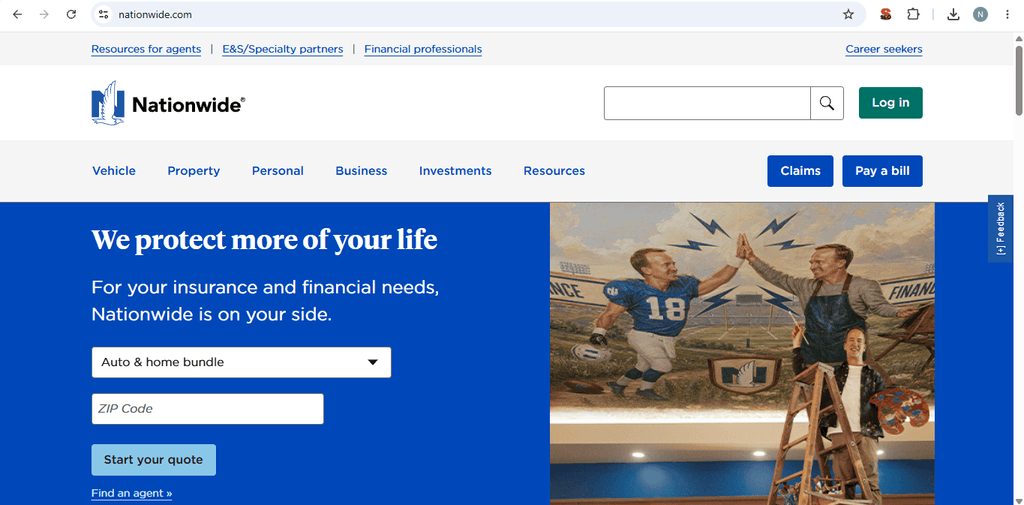
Best for: People considering hybrid long-term care insurance solutions.
Consumers researching life insurance policies that include potential long-term care benefits may wish to investigate Nationwide’s current offerings. Depending on the policy, a hybrid arrangement combines life insurance with benefits that may be available when the policyholder qualifies for long-term care.
These policies may appeal to people who want to consider both care funding and a potential death benefit. However, hybrid products differ from traditional standalone long-term care insurance in their funding requirements, guarantees, and policy conditions.
Pros and Cons
| Pros | Cons |
| May combine life insurance and long-term care benefits | Initial funding requirements may be substantial |
| Can address multiple financial planning objectives | Policy structures can be complex |
| May provide a death benefit, depending on the contract | Care benefits may reduce the remaining death benefit |
Highlights
- Type of coverage: Investigate life insurance policies with long-term care benefits.
- Premium arrangement: Depends on the policy and funding structure.
- Care benefits: Check the maximum available benefit and the conditions for receiving it.
- Death benefit: Understand whether long-term care claims reduce the remaining death benefit.
- Surrender terms: Review the conditions and potential consequences of early termination.
Why We Chose It
Nationwide is included for consumers interested in comparing hybrid coverage with traditional long-term care insurance. Compare the total funding commitment, care benefits, death benefit, and policy guarantees instead of assuming a hybrid policy is automatically cheaper.
3. New York Life

Best for: People prioritizing long-term care planning alongside broader financial planning.
New York Life provides insurance and financial services. Consumers researching long-term care planning can explore its current offerings, including any available life insurance or linked-benefit products that may fit their needs.
When evaluating a policy, distinguish traditional long-term care insurance from products that use life insurance or another financial arrangement to provide care benefits.
Pros and Cons
| Pros | Cons |
| Offers broader insurance and financial planning resources | Not every product is suitable for every applicant |
| May interest people evaluating life insurance and care planning together | Product availability and eligibility may differ |
| Can be considered as part of retirement planning | Understanding linked benefits may require extra care |
Highlights
- Coverage type: Check which long-term care or linked-benefit products are currently available.
- Benefit amount: Review the maximum benefit and how benefits are paid.
- Benefit period: Verify how long benefits may be payable.
- Policy costs: Obtain a quote and review premium payment requirements.
- Additional benefits: If life insurance is involved, understand how care claims may affect the death benefit.
Why We Chose It
New York Life is included because insurance decisions can be connected to retirement and estate planning. Review the specific contract and compare it with other providers before choosing a policy.
4. Northwestern Mutual

Best for: Individuals interested in integrating long-term care planning into a personalized financial review.
Northwestern Mutual provides insurance and financial planning services. Consumers can review its current product offerings to determine whether long-term care insurance or related solutions are relevant to their needs.
Long-term care expenses can affect retirement savings, household finances, and other financial priorities. Evaluating coverage as part of a broader financial plan may help consumers understand these trade-offs.
Pros and Cons
| Pros | Cons |
| Can be considered as part of broader financial planning | The best choice depends on individual circumstances |
| May help consumers evaluate insurance alongside retirement objectives | Product features and eligibility must be verified |
| Relevant when comparing long-term financial needs | Personalized recommendations and product selection may take time |
Highlights
- Product availability: Confirm which long-term care-related products are currently offered.
- Premium structure: Ask how premiums are calculated and paid.
- Care benefits: Review eligibility conditions, maximum benefits, and covered services.
- Policy flexibility: Find out whether benefits, premiums, or coverage can change.
- Long-term affordability: Consider whether payments will remain manageable over time.
Why We Chose It
Northwestern Mutual is included for consumers who want to evaluate insurance choices as part of a comprehensive financial plan. As with any provider, review the actual policy rather than relying on the company name alone.
5. GoldenCare Insurance
Best for: Comparing multiple long-term care insurance providers.
GoldenCare Insurance is an insurance brokerage rather than an insurance carrier. Depending on where a consumer lives and the brokerage’s current carrier relationships, it may help consumers explore different long-term care insurance options.
Using a brokerage may be useful when comparing several policies. However, the available options depend on the brokerage’s relationships with carriers and the products for which the applicant is eligible.
Pros and Cons
| Pros | Cons |
| May help consumers compare features across carriers | Available options depend on current carrier relationships |
| May help consumers evaluate different policy structures | It is not the insurance company responsible for paying claims |
| May explain differences between available policies | Consumers should confirm compensation arrangements and carrier details |
Highlights
- Business type: Insurance brokerage.
- Provider comparison: Ask which carriers and policies are available in your state.
- Policy selection: Compare traditional and hybrid plans where available.
- Costs: Request written quotes and compare policies with similar benefits.
- Carrier responsibility: Confirm which insurance company will issue the policy and pay eligible claims.
Why We Chose It
GoldenCare Insurance is included because comparing multiple carriers can help consumers understand differences in coverage, premiums, and policy structures. Request side-by-side comparisons and confirm the terms with the company issuing the policy.
What Is Long-Term Care Insurance?
Long-term care insurance is designed to help cover some of the costs of ongoing care when an individual needs assistance with daily activities or supervision because of a chronic illness or another qualifying condition.
Depending on the contract, covered assistance may include:
- Home care: Assistance with everyday activities at home.
- Assisted living: Eligible services for residents of an assisted living facility.
- Nursing facility care: Care in a licensed nursing facility that meets the policy’s requirements.
- Adult day care: Certain supervised care services during the day.
- Care coordination: Services or support included under specific policy terms.
Policies generally include benefit triggers, exclusions, benefit limits, and other conditions. A policyholder may need to demonstrate difficulty performing specified activities of daily living (ADLs) or meet a cognitive impairment requirement before benefits become available.
Types of Long-Term Care Insurance
Understanding the different policy structures can help you compare the best long term care insurance companies more effectively.
1. Traditional Long-Term Care Insurance
Traditional policies are designed to provide long-term care benefits when the policyholder meets the contract’s eligibility requirements.
Potential advantage: Coverage focuses on eligible long-term care costs.
Potential drawback: Premiums may increase where permitted by the policy and applicable state regulations. Traditional policy premiums typically do not provide a life insurance death benefit if the policyholder never needs care.
2. Hybrid Life Insurance With Long-Term Care Benefits
Hybrid policies combine life insurance with long-term care benefits or allow access to part of the policy’s value for eligible care.
Potential advantage: If the contract includes a death benefit, the policy may pay a benefit if long-term care benefits are not fully used.
Potential drawback: Funding requirements, benefit calculations, and surrender provisions may be more complicated than those of traditional coverage.
3. Life Insurance With an Accelerated Benefit Rider
Some life insurance policies include a rider that allows the policyholder to access a portion of the death benefit when certain conditions are met. Conditions, eligible expenses, and payment methods depend on the contract.
Potential advantage: It may allow access to funds in qualifying circumstances.
Potential drawback: Using the benefit may reduce the death benefit paid to beneficiaries. Not all riders provide comprehensive long-term care protection.
4. Employer-Sponsored or Group Coverage
Some employers or groups may offer access to long-term care insurance or related benefits.
Potential advantage: Group arrangements provide another way to explore coverage.
Potential drawback: Coverage, price, portability, and eligibility vary. Confirm whether coverage continues if you change jobs or leave the group.
Factors That Affect the Cost of Long-Term Care Insurance
There is no single price for long-term care insurance. Premiums depend on the applicant, policy, and insurer’s underwriting guidelines.
| Cost factor | How it can affect premiums |
| Age when applying | Applying at an older age generally means higher premiums and may affect eligibility |
| Health and underwriting | Medical history and underwriting rules can influence acceptance and pricing |
| Daily or monthly benefit | Higher maximum benefits generally increase the cost |
| Benefit period | Longer potential benefit periods can increase premiums |
| Elimination period | A shorter waiting period before benefits begin may cost more |
| Inflation protection | Options that increase future benefits generally raise premiums |
| Policy type | Traditional and hybrid policies have different pricing and funding structures |
| Location | Care costs, policy availability, and state rules can affect choices |
| Discounts | Some policies may offer discounts to eligible applicants |
How to Compare Costs Fairly
Do not compare premiums alone. Request quotes with similar benefit amounts, benefit periods, elimination periods, inflation protection, and coverage definitions.
For hybrid coverage, compare the total premium or funding commitment, potential death benefit, care benefits, and surrender terms. A lower initial premium does not necessarily mean the policy provides the same protection.
Pros and Cons of Long-Term Care Insurance
The following table summarizes the main advantages and disadvantages of long-term care insurance to consider before purchasing a policy.
| Pros | Cons |
| Can help cover eligible long-term care expenses | Premiums can be expensive |
| May help protect retirement savings from some care costs | Traditional premiums may increase where permitted |
| Can provide more options for arranging future care | Underwriting may limit eligibility |
| May reduce some financial pressure on family members | Policies contain exclusions, benefit limits, and qualifying conditions |
| Can support planning for care at home or in a facility | Benefits may not cover every expense or the full duration of care |
| Hybrid products may combine care benefits with life insurance | Hybrid products can require substantial funding and have complex terms |
Is Long-Term Care Insurance Worth It?
Long-term care insurance may be worth considering if you want to reduce the risk of paying substantial care costs from your savings and can afford the premiums over time.
It may be less suitable if premiums would strain your budget or if you have other resources and a clear plan for paying future care expenses.
Consider your savings, income, family support, health, location, and preferred type of care before deciding. Weigh the potential benefits against the long-term costs and risks of maintaining the policy.
How to Choose the Best Long Term Care Insurance
Follow these steps to compare coverage and select a policy that fits your needs.
1. Estimate Your Potential Care Needs
Think about the setting you would prefer, such as your home, an assisted living community, or a nursing home. Research care costs in your area and consider how much you could comfortably pay from your savings.
2. Choose the Policy Type That Matches Your Goals
Compare traditional long-term care insurance with hybrid life insurance and long-term care arrangements. Understand what each policy covers and what happens if you never need long-term care.
3. Compare Multiple Quotes
Request quotes with similar benefit amounts, benefit periods, elimination periods, and inflation protection. Premium differences can be misleading when the policies provide different levels of coverage.
4. Examine Benefit Triggers and Exclusions
Read the policy to understand the conditions that must be met before benefits are paid. Review covered services, qualifying providers, waiting periods, exclusions, and any required assessments.
5. Assess Inflation Protection
The cost of care may increase in the future. Find out how the policy’s benefits may increase and how much inflation protection adds to the premium.
6. Consider Premium Affordability
Consider whether you can continue paying premiums during retirement or periods of reduced income. Ask about the insurer’s premium-increase history where information is available and what options may be available if premiums rise.
7. Check the Insurance Company
Verify that the company issuing the policy is authorized to operate in your state. Review available financial strength information and consult consumer resources from your state insurance department.
8. Read the Contract Before Purchasing
Do not rely only on a sales brochure or comparison chart. Review the policy, benefit schedule, exclusions, renewal provisions, and surrender or cancellation terms.
How SimpleInsured Helps Consumers Compare Insurance Options
SimpleInsured is an educational insurance resource designed to help readers research coverage options and understand common insurance terms before making decisions. SimpleInsured is not an insurance company, agent, or broker.
Readers can use SimpleInsured’s informational articles to understand what to compare, learn about common policy features, and prepare questions for insurers or appropriately licensed professionals. The availability of any comparison or application service depends on the options provided on the website.
SimpleInsured also covers other insurance categories, helping readers research different types of coverage.
Health Insurance
Health insurance helps pay for eligible medical services under the plan’s terms. Plans may have different deductibles, copayments, coinsurance requirements, and provider networks. Health insurance is not the same as long-term care insurance, which is designed to address qualifying ongoing care needs.
Learn more about health insurance.
Life Insurance
Life insurance generally pays a death benefit to the beneficiary under the policy’s terms. Some policies may include riders or linked benefits that provide access to funds for qualifying long-term care.
Explore life insurance.
Pet Insurance
Pet insurance may reimburse eligible veterinary expenses when a pet develops a covered illness or injury. Restrictions, waiting periods, exclusions, and reimbursement limits depend on the plan.
Explore SimpleInsured’s pet insurance options.
Auto Insurance
Auto insurance typically includes liability coverage and may also cover damage to a vehicle and other eligible losses, depending on the policy. Coverage requirements and insurance rules vary by state.
Explore auto insurance options.
Why Compare Insurance Options Carefully?
Different insurance types serve different purposes. Compare coverage, exclusions, cost-sharing requirements, eligibility, and benefit limits before selecting a plan. Read the policy documents and verify details with the provider.
Frequently Asked Questions
What Are the Best Long Term Care Insurance Companies in the USA?
Mutual of Omaha, Nationwide, New York Life, and Northwestern Mutual are providers worth researching. GoldenCare Insurance may help consumers explore options from multiple insurance carriers, depending on availability.
How Much Does Long-Term Care Insurance Cost?
The cost depends on your age, health, coverage amount, benefit period, elimination period, inflation protection, and policy type. Request personalized quotes to compare costs accurately.
What Does Long-Term Care Insurance Cover?
Depending on the policy, it may cover eligible home care, assisted living, nursing facility care, adult day care, and assistance with daily activities.
What Is the Difference Between Traditional and Hybrid Long-Term Care Insurance?
Traditional policies focus on long-term care benefits, while hybrid policies combine long-term care benefits with life insurance or another linked financial arrangement. Their costs, benefits, and conditions differ.
At What Age Should You Buy Long-Term Care Insurance?
Many people begin researching coverage in their 50s or early 60s. The right time depends on affordability, health, eligibility, and personal financial goals.
Does Medicare Cover Long-Term Care?
Medicare generally does not cover ongoing custodial care when that is the only care needed. It may cover certain eligible skilled nursing or home health services under specific conditions.
Can Long-Term Care Insurance Premiums Increase?
Yes. Premiums for some traditional policies may increase, subject to policy provisions and state regulations. Ask about the insurer’s rate-increase history before purchasing coverage.
Is Long-Term Care Insurance Worth It?
It may be worthwhile if you want to protect your savings from some eligible long-term care expenses and can afford the premiums. Consider your assets, potential care needs, family support, and policy benefits before deciding.
What Should I Compare When Choosing a Long-Term Care Insurance Policy?
Compare premiums, benefit maximums, benefit periods, elimination periods, inflation protection, covered services, exclusions, benefit triggers, and the financial strength of the insurance company.
Is GoldenCare Insurance an Insurance Carrier?
No. GoldenCare Insurance is an insurance brokerage, not an insurance carrier. Confirm which insurance company will issue your policy and pay eligible claims.
Final Thoughts
Choosing among the best long term care insurance companies in the USA involves evaluating much more than company names. Compare policy structure, premiums, benefit limits, elimination periods, inflation protection, covered services, and the conditions under which benefits are paid.
Mutual of Omaha, Nationwide, New York Life, and Northwestern Mutual are providers worth researching for potentially suitable insurance solutions. GoldenCare Insurance may be worth considering if you want to explore options through a brokerage. Confirm that products are currently available and verify the policy terms before making a decision.
Use SimpleInsured’s educational resources to understand insurance fundamentals, prepare questions, and identify features to compare. The policy you select should fit your care preferences, financial situation, and long-term budget.